
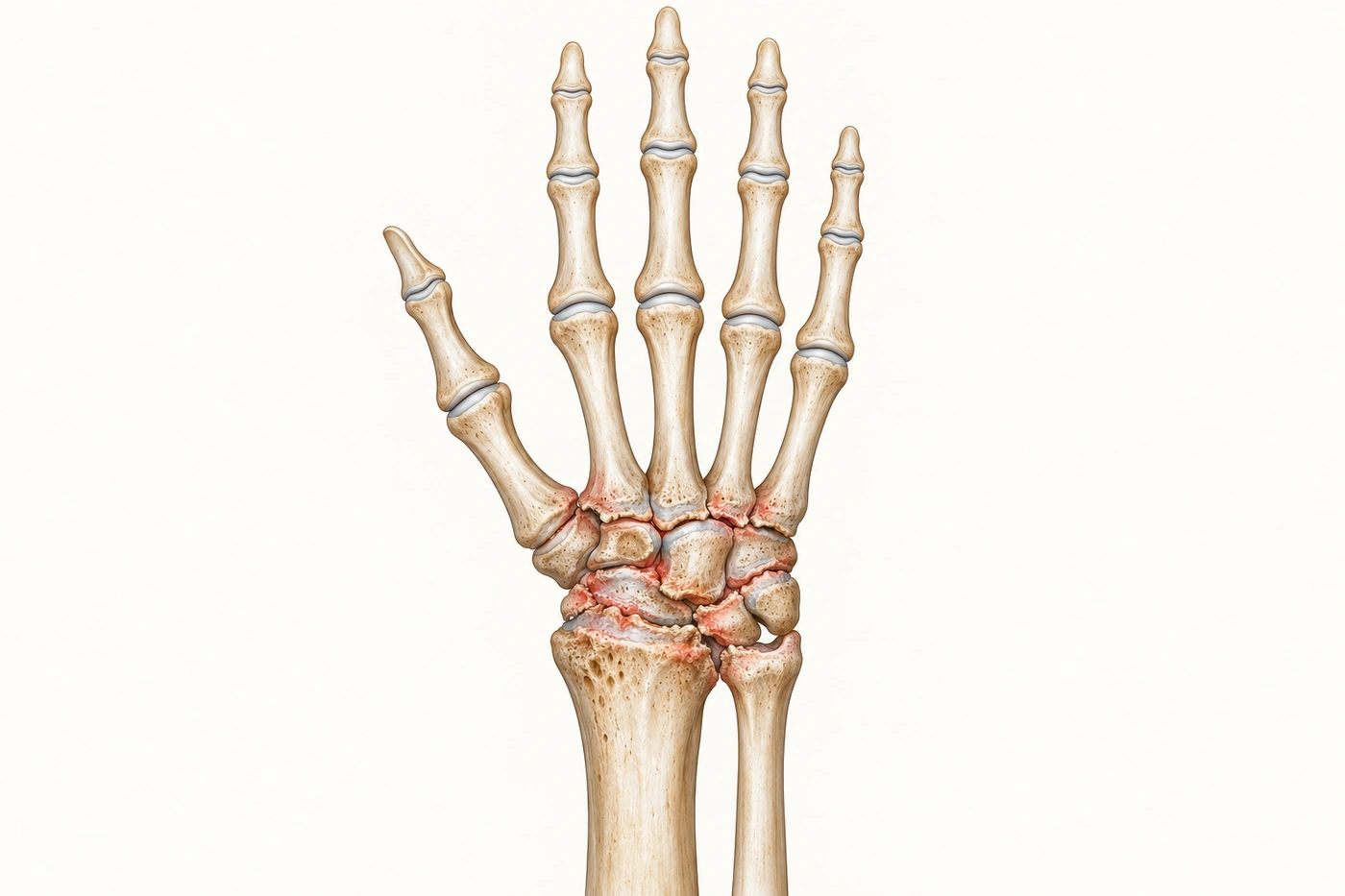
ANATOMY AT A GLANCE
Cartilage covers the wrist’s joint surfaces. Osteoarthritis changes cartilage and bone; the pattern varies.
Typical symptoms
Deep joint pain, stiffness and reduced movement are typical. General swelling may occur but does not prove osteoarthritis.
How is the cause assessed?
Examination by a clinician experienced in hand surgery and, where appropriate, X-rays establish the cause. Pain and swelling may also result from injury or inflammatory disease.
Consider other causes
Wrist osteoarthritis may follow earlier bone or ligament injuries. Inflammatory joint disease can also cause pain and swelling and requires different treatment.
Treatment options
Without surgery
Activity changes, a wrist brace for demanding tasks and individually guided exercises may help.
Surgical options
For severe persistent symptoms, different operations may be discussed depending on the joints involved.
Suitable treatment depends on the confirmed diagnosis, examination findings and your individual needs.
When to seek an examination
Seek a clinician experienced in hand surgery for persistent pain, swelling or increasing stiffness. Symptoms alone cannot confirm osteoarthritis.
Sources & editorial status
American Academy of Orthopaedic Surgeons (AAOS)