
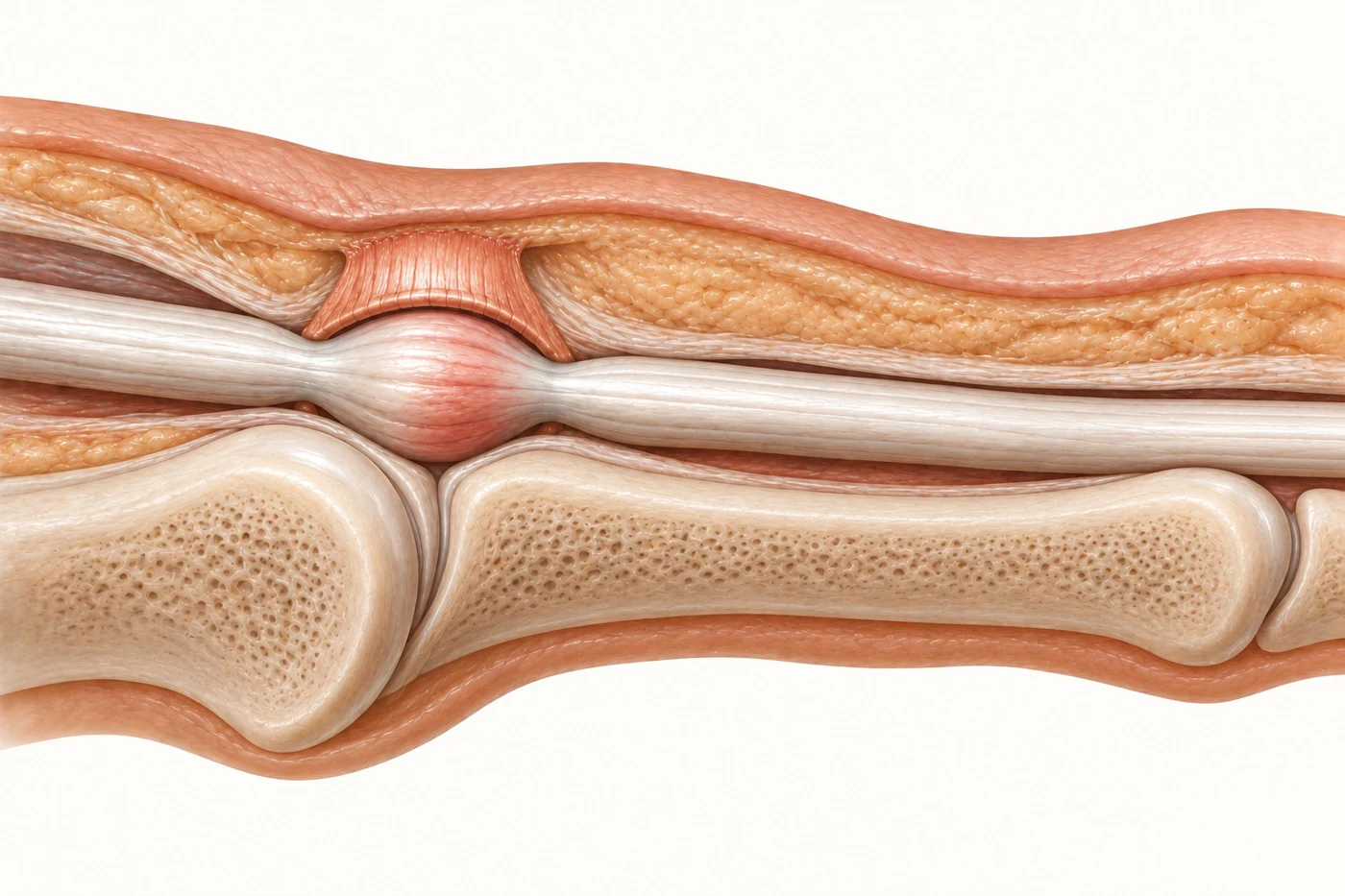
ANATOMY AT A GLANCE
The flexor tendon glides through pulleys. A thickened area can catch at the A1 pulley at the base of the finger.
Typical symptoms
The finger may release with a snap or remain stuck in a bent position. Symptoms are often worse in the morning; there may be tenderness or a small swelling at the finger base.
How is the cause assessed?
Catching can usually be assessed during examination. A locked finger should be examined rather than forcefully straightened.
Consider other causes
A persistently bent finger may also result from Dupuytren’s contracture or joint stiffness. Trigger finger primarily involves catching of the flexor tendon.
Treatment options
Without surgery
Depending on severity, a temporary splint, activity adjustment or a clinician-guided steroid injection may help.
Surgical options
If locking persists or symptoms continue, a small operation can release the tight pulley.
Suitable treatment depends on the confirmed diagnosis, examination findings and your individual needs.
When to seek an examination
Repeated catching, pain or locking should be assessed. Do not forcefully straighten a locked finger.
Sources & editorial status
British Society for Surgery of the Hand (BSSH)