
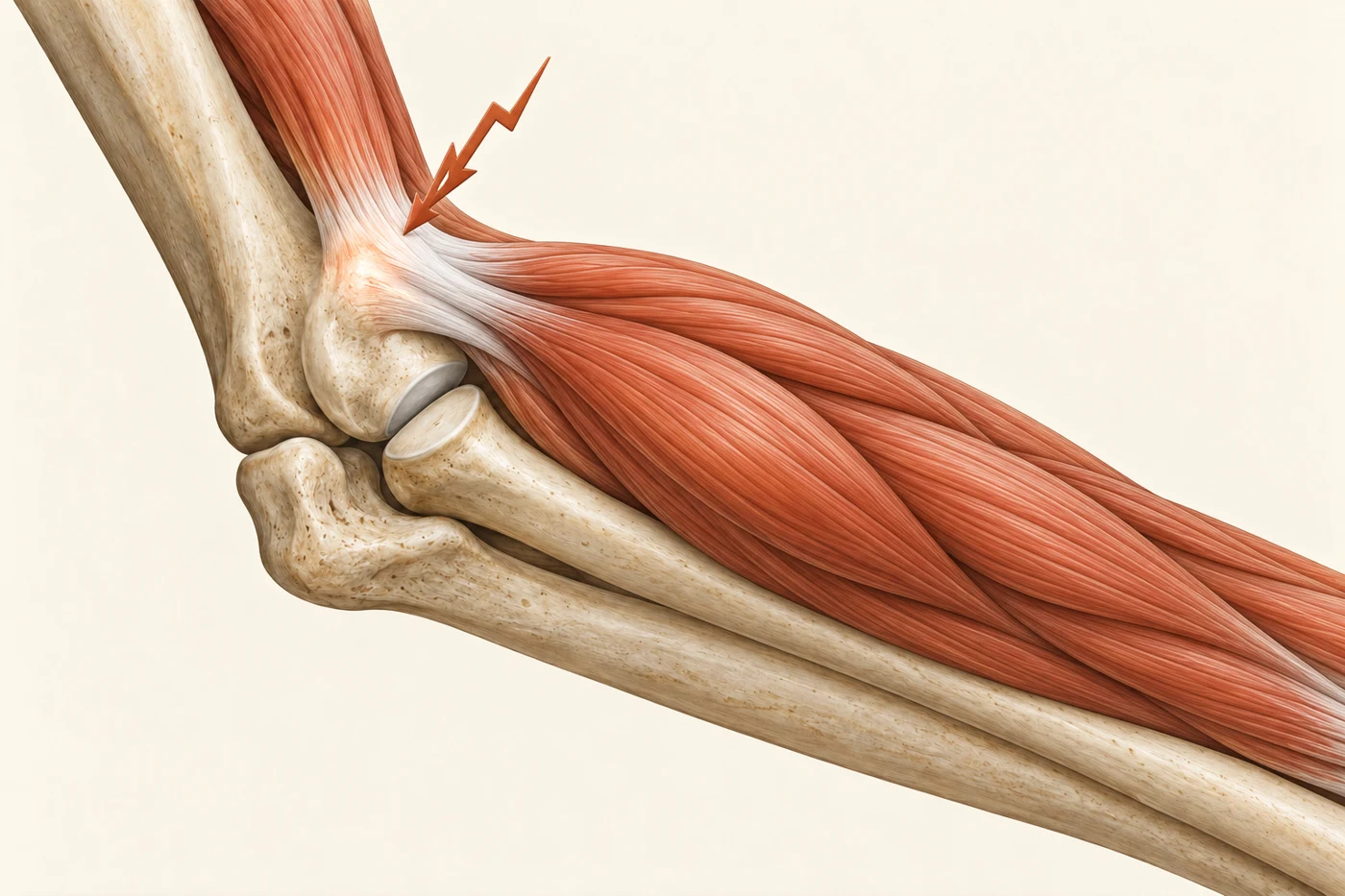
ANATOMY AT A GLANCE
The common extensor tendon originates on the outer elbow. This attachment is a typical site of pain in tennis elbow.
Typical symptoms
Gripping, palm-down lifting and wrist extension may aggravate pain on the outer elbow. Pain may extend into the forearm.
How is the cause assessed?
Examination assesses the painful tendon attachment, wrist movements and elbow motion. Further assessment may be needed if the pattern is unusual.
Consider other causes
Not all elbow pain is tennis elbow. Symptoms following injury or a marked loss of movement need separate assessment.
Treatment options
Without surgery
Activity changes and progressive guided strengthening often help. A forearm strap may offer temporary relief.
Surgical options
Surgery is rarely considered and generally follows prolonged symptoms despite suitable nonsurgical care.
Suitable treatment depends on the confirmed diagnosis, examination findings and your individual needs.
When to seek an examination
Seek assessment if symptoms persist despite activity adjustments or substantially limit function. Recovery can take months; a short exercise plan does not promise recovery within that period.
Sources & editorial status
National Health Service (NHS)
American Society for Surgery of the Hand (ASSH)
IN-DEPTH PATIENT GUIDE
Tennis elbow: the complete PDF guide
Arrive prepared – keep important symptoms and questions at hand.
It can be hard to remember everything during an appointment. Use the PDF guide to prepare at your own pace and record your information in the spaces provided:
- Record your symptoms: Note your symptoms and how they change, so important details are less likely to be overlooked during the conversation.
- Prepare for your doctor’s questions: Think ahead about the information that will be important to discuss.
- Bring your own questions: Write down what you would like to clarify and take your notes to the appointment.
You also receive illustrated information about the condition and treatment options.
English · 11 pages · PDF
Price: Current price on Gumroad
Buy the PDF guide with appointment preparationView guide