
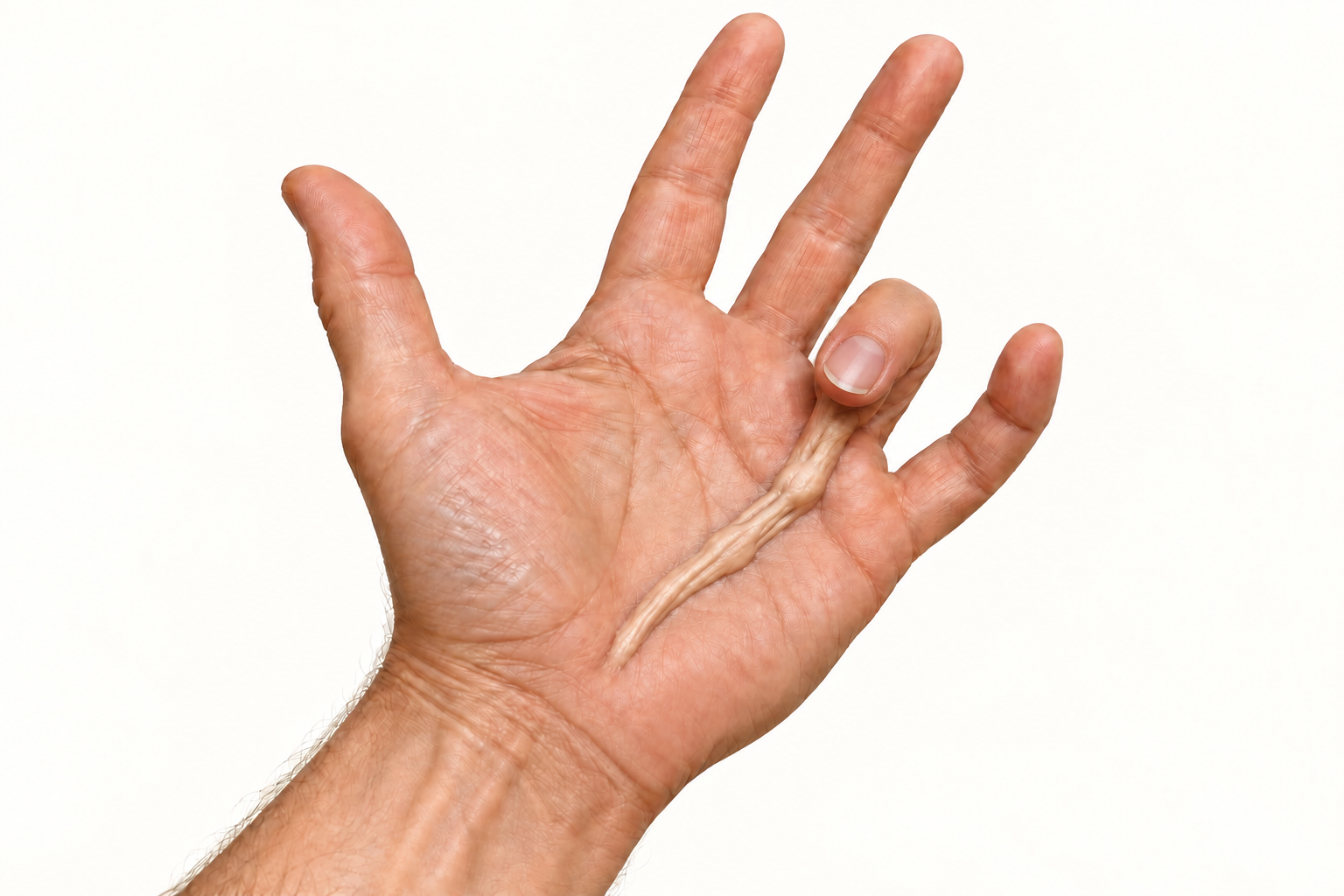
ANATOMY AT A GLANCE
In Dupuytren’s disease, connective tissue in the palm thickens. Cords can progressively pull fingers into a bent position.
Typical symptoms
Nodules and cords in the palm are often only mildly painful or painless. The ring or little finger is commonly affected. As the finger bends further, laying the hand flat becomes difficult.
How is the cause assessed?
Examination assesses the cords and measures how far the finger joints can straighten. Increasing limitation should be discussed with a hand specialist.
Consider other causes
Not every palm lump is Dupuytren’s disease. Location in the connective tissue and cord formation matter; a catching finger is a different pattern.
Treatment options
Without surgery
Mild changes are often monitored. Exercises and splints cannot reliably stop the condition.
Surgical options
If bending becomes troublesome, a needle procedure or surgery may be discussed. A tabletop test can help monitor progression.
Suitable treatment depends on the confirmed diagnosis, examination findings and your individual needs.
When to seek an examination
Discuss increasing loss of finger extension or inability to lay the hand flat with a hand specialist. Progression is often slow and varies between individuals.
Sources & editorial status
British Society for Surgery of the Hand (BSSH)